DTSC 8140/ ITCS 8150 (Hybrid)

Fundamentals of AI

Location: Dubois Center 806
Days: August 18, September 1, 15, 29, October 6 (Midterm), 20, November 3, 17, December 1.
Time: Tuesdays, 2:30-5:15pm (10 minutes break: 3:50pm)


Course Syllabus for DTSC 8140 (Foundations of AI) & ITCS/ITIS 8150 (AI)
https://catalog.charlotte.edu/preview_course_nopop.php?catoid=41&coid=145368

Foundations of AI techniques and their applications in various real-world domains and how to implement a system with intelligent functionality.
Students will learn to judge when intelligent functionality and AI may be a good solution for a problem and be able to choose suitable AI methods and techniques. They will learn how to choose between Rule-based and LLM-based AI agents.

Topics to be covered:

  • State Graphs
  • Search Algorithms (Uniformed, Informed, Adversarial)
  • Granular Computing
  • Data Semantics
  • Data Mining Techniques
  • Data Balancing & Discretization
  • Data Reduction
  • Folksonomy
  • Mining Big Data
  • Action Rules Discovery & Meta Actions
  • Knowledge Graphs
  • Propositional Logic
  • First-Order Logic
  • Godel's Completeness Theorem
  • Resolution
  • Gentzen Systems
  • Modal Logic
  • Large Language Models (incompleteness & hallucinations)
  • Retrieval-Augmented Generation (RAG)
  • Generative AI
  • Rule-Based vs. LLM-Based AI Agents
  • Recommender Systems & Personalization
  • Knowledge Graph based Recommender Systems
  • Recommender Systems in Business, Healthcare, Art, Music


    Publications concerning topics on action rules and actionability covered in the class which are authored by my former phd students


    Attendance Policy:

    Attendance is mandatory. If you miss n classes, n points will be subtracted from your total number of points.
    Excuse absence must be accompanied by official documentation that clearly states that you were physically unable to make the class.


    Office Hours (August 24 - December 4)

    If you have questions concerning any topic covered in the class, please join me at the office hours scheduled either in Center City, Room 713 or on ZOOM every week. No office hours on October 12-13 (Fall Break)

    Office hours are posted below:

    Zbigniew Ras
    Office Hours on Tuesdays
    - In Center City, Room 713 (5:20-7:20pm): Sept 1, 15, 29, Oct 20, Nov 3, 17, Dec 1.
    - On ZOOM (2:30-4:30pm): August 25, Sept 8, 22, Oct 27, Nov 10, 24.
    ZOOM LINK: https://charlotte-edu.zoom.us/j/96904521017
    If nobody shows up by 3:00pm, I will leave the zoom meeting.


    Week 1 & 2 (August 18 - Center City 806) & (August 25 - asynchronously)
    Learning objectives: State Graph [1], Search Algorithms (Uniformed, Informed, Adversarial) [2,3,4], Data Mining Techniques [5,6,7,8,9,10]
    [1] State Graphs, Search Algorithms I
    [2] Search Algorithms II
    [3] A* Algorithm Example
    [4] Adversarial Search
    [5] Classification Trees, PDF
    [6] Association Rules, PDF,
    [7] LERS, PDF
    [8] Rough Set Exploration System (RSES) , RSES, RS Manual
    [9] Support Vector Machine , PDF
    [10] KNN Algorithm
    Exercises/ Problems I & Exercises/ Problems II

    Week 3 & 4 (September 1 - Center City 806) & (September 8 - asynchronously)II
    Learning objectives:Data Balancing & Discretization [1,3], Data Reduction [1], Folksonomy [5], Data Semantics [4], Granular Computing [4]
    [1] Data Reduction and Discretization, PDF
    [2] Mining Incomplete Data PDF, Video Lecture
    [3] Mining Imbalanced Data (MSmote), LINK
    [4] Granular Computing (Rough Sets), PDF
    [5] Folksonomy I Folksonomy II
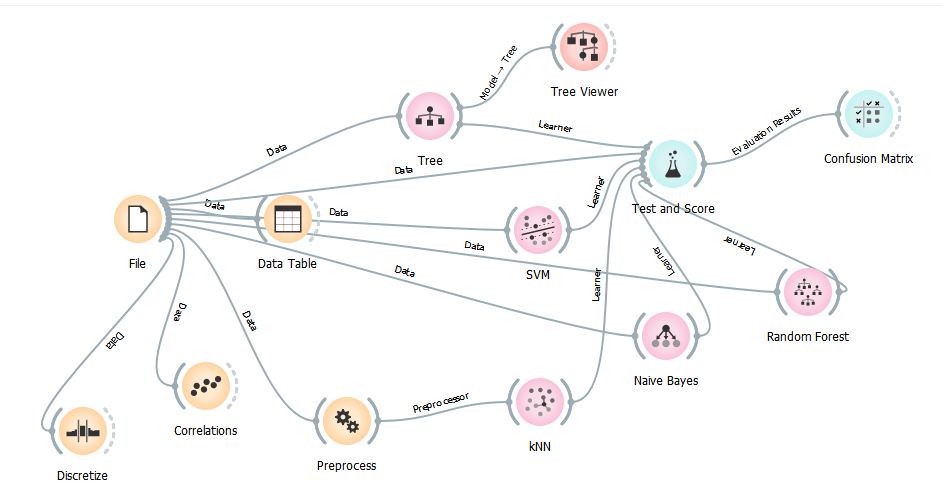
    [6] Bratko's ORANGE , Orange Sample
    Exercises/ Problems to solve. Solutions

    Week 5 & 6 (September 15 - Center City 806) & (September 22 - asynchronously)
    Learning objectives: Big Data [3], Action Rules Discovery & Meta Actions [1,2,4]
    [1] Action Rules and Meta-Actions PDF, Video Lecture
    [2] Action Rules Extraction Using Action Reducts
    [3] Mining Big Data, PDF
    [4] Lisp Miner, Video Lecture, Additional Information
    Exercises/ Problems to solve. Solutions

    Sample Problems (for Midterm Exam)
    Get familiar with solutions. If problem is not solved, try to solve it.

    Week 7 & 8 (September 29 - Center City 806) & (October 6 - Woodward ????)
    Learning objectives: Propositional Logic, First-Order Logic, Godel's Completeness Theorem, Resolution, Gentzen Systems
    [1] Propositional Logic I
    [2] Propositional Logic II
    [3] First Order Logic
    [4] Resolution Strategies
    [5] Exercises Booklet
    [6] Gentzen System

    Midterm (Woodward ???): October 6, 2:30-5:00pm

    Week 9 & 10 (October 20 - Center City 806) & (October 27 - asynchronously)
    Learning objectives: Knowledge Graphs, Modal Logic, Large Language Models (incompleteness & hallucinations), Retrieval-Augmented Generation (RAG)
    [1] Knowledge Graphs
    [2] Knowledge Graph Example
    [3] Modal Logic
    [4] Large Language Models (LLM)
    [5] Retrieval-Augmented Generation (RAG)

    Project
    Project Rubric (to be used for grading)

    Week 11 & 12 (November 3 - Center City 806) & (November 10 - asynchronously)
    Learning objectives: Recommender Systems & Personalization, Knowledge Graph based Recommender Systems.
    [1] Recommender Systems (RS)
    [2] Content Based RS
    [3] Knowledge Based RS
    [4] Knowledge-Graph Based RS

    Exercises/ Problems to solve.

    Week 13 & 14 (November 17 - Center City 806) & (November 24 - asynchronously)
    Learning objectives: Recommender Systems in Business, Healthcare, Art, Music. How to choose between Rule-based and LLM-based AI agent.
    [1] Art
    [2] Business
    [3] Health
    [4] Music
    [5] Rule-Based vs. LLM-Based AI Agents

    Week 15 (December 1 - Center City 806)
    Learning objectives: Review for the Final Exam.
    [1] Review for the Final Exam
    [2] Sample Problems (Final Exam)


    FINAL EXAM (Woodward ???)

    December 8 (Tuesday), 2:30-5:00pm.


    Project
    Upload the project/documentation to Canvas or email them to
    ras@uncc.edu
    not later than December 4.
    Project Rubric (to be used for grading)


    Points: Midterm - 30 points, Final - 30 points, Project - 40 points
    Attendance Policy: If you miss n classes, n points will be subtracted from your total number of points.
    Excuse absence must be accompanied by official documentation that clearly states that you were physically unable to make the class.
    Grades: A [90-100], B [80-89], C [65-79].


    Instructor:       Zbigniew W. Ras

    Office: Woodward Hall 430C
    e-mail: ras@charlotte.edu


    [1] KDD Software

    [2] Statistics for Data Science & Machine Learning

    [5] SCARI: Action Rules Discovery Package

    [6] Repository of large datasets